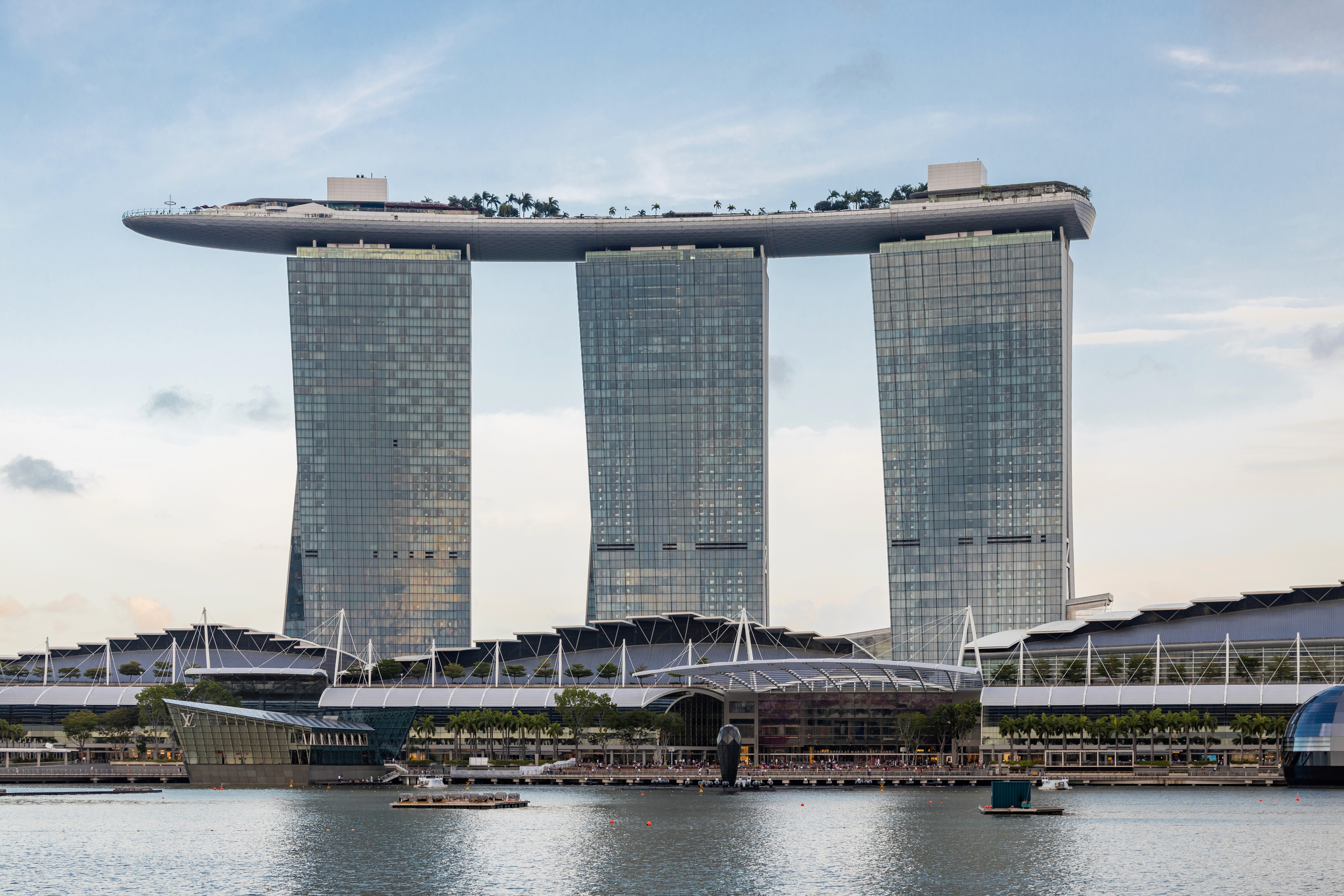

You live in Singapore and want to invest in French real estate? Between complex financing, non-resident taxation, and remote management, this project requires solid preparation. Here is everything you need to know to make your investment successful from the city-state.
Why invest in France from Singapore in 2026?
The French community in Singapore is growing rapidly. With around 12,000 to 15,000 French nationals officially registered (and probably 25,000 to 30,000 in total according to the French Embassy), many are considering a return to France or looking to diversify their assets in France.
The French real estate market currently offers attractive opportunities for expatriates. After three years of decline, prices are rising again in 2026 with a slight recovery (+0.7% in 2025, forecast +1% in 2026). Mortgage interest rates are around 3.05% to 3.40% for 20-25 year terms, well below the 2023 peaks.
Favorable context for rental investment: Average gross yield reaches 4.78% in 2026 versus 4.6% in 2022, driven by the price correction in 2023-2024 and continued rent increases. Paris now shows a 3.91% yield with an average price around €11,500/m².
The advantages for French residents in Singapore:
Asset diversification: Protect part of your savings in euros
Return planning: Anticipate your future primary residence
Additional rental income: Generate passive income in France
Easier wealth transfer: Build assets for your children
Inflation protection: Real estate remains a tangible safe-haven asset
💡 Key takeaway: The France-Singapore tax treaty avoids double taxation and facilitates cross-border investments for Singapore residents.
Real estate in your overall wealth strategy
Rental real estate is a cornerstone, but not your only investment option from Singapore. A balanced wealth strategy can combine:
Rental real estate: Regular income and capital appreciation (5-6% total return)
SCPI: Real estate without management (4-5.5% return)
Luxembourg life insurance: Attractive tax treatment for expatriates, equity/bond diversification
PEA or securities account: Access to financial markets (if you keep your French tax residency)
Real estate should ideally represent 40-60% of a diversified portfolio depending on your risk profile. To explore complementary financial investments, consult a wealth advisor specialized in expatriates.
Obtaining real estate financing as a non-resident
First reality: obtaining a mortgage from Singapore is more demanding than as a French resident. Banks view non-residents as higher-risk profiles. For an overview of the process, read our complete guide to real estate mortgage for French expatriates.
Bank criteria for non-residents
Required down payment: Traditional banks generally require between 30% and 40% of the purchase price for non-residents. This down payment must cover notary fees (around 7-8% for existing properties) and a substantial part of the price.
However, Invexa negotiates with its banking partners for terms comparable to French residents: a down payment of only 10% to 20% of the total amount. This difference represents tens of thousands of euros in savings and makes investing accessible to more expatriates.
Documents to prepare:
Proof of income for the last 3 months (pay slips)
Latest tax assessments (French and Singaporean)
Bank statements for the last 3 months
ID and proof of address in Singapore
Employment contract or professional status
Bank certificate (savings capacity)
Debt capacity: Banks apply a maximum debt ratio of 35% of your net income, including current liabilities. According to impots.gouv.fr, your Singapore-sourced income is taken into account but may be subject to a prudent conversion coefficient.
Steps in the remote purchase journey
1. Preparation (2-3 months before) → Build the financing file, obtain a bank agreement in principle
2. Search (1-2 months) → Identify properties, virtual and in-person viewings (if possible during a trip)
3. Purchase offer (48-72h) → Price negotiation, draft offer with conditions precedent
4. Preliminary sale agreement (7-10 days after acceptance) → Signing at the notary (possible by power of attorney), payment of 5-10% deposit
5. Financing (30-45 days) → Obtain final mortgage offer, cooling-off period
6. Final deed (90 days after preliminary agreement) → Final signing at the notary, handover of keys
⚠️ Important: Plan at least one trip to France for viewings or arrange a notarized power of attorney for signatures. The power of attorney costs around €100-150 and can be issued at the French Consulate in Singapore.
Strategies to maximize your chances
Prepare your file in advance. Build it 2-3 months before starting your property search to save time during negotiations. A strong file positions you as a serious buyer.
Prioritize brokers specialized in expatriates. They know which banks accept non-resident applications and can negotiate better terms. Invexa specifically supports expatriates in this process with a network of suitable banking partners.
✅ Good to know: The average processing time for a non-resident application is 4 to 6 weeks, versus 2-3 weeks for a resident. Factor these timelines into your acquisition schedule.
Understanding taxation: France and the tax treaty with Singapore
Non-resident taxation differs from that of French residents. You must declare French-source income while also meeting your tax obligations in Singapore.
France-Singapore tax treaty: what you need to know
The tax treaty signed in 2015 between France and Singapore avoids double taxation. French-source real estate income is taxable in France, but Singapore will generally grant a tax credit to prevent double taxation.
In practical terms: you pay tax in France, then declare this income in Singapore where an exemption or tax credit mechanism applies depending on your personal situation.
Taxation of rental income for non-residents
Minimum tax rate: As a non-resident, you are subject to a minimum rate of 20% for income up to €29,579 and 30% above that, according to Service-Public.fr. These rates apply if the progressive scale would be less favorable.
You may request application of the average rate calculated on all your global income if it is more advantageous. This option requires declaring your Singaporean income to the French tax authorities.
Social contributions: French real estate income is subject to social contributions at a rate of 17.2% (CSG, CRDS, solidarity levy). However, if you are affiliated with the Singapore social security system, you may be exempt from CSG/CRDS but remain subject to the solidarity levy of 7.5%.
To benefit from this partial exemption, you must provide proof of affiliation to the Singapore system to the Non-Resident Individual Tax Service.
Comparison of tax regimes by rental type
Rental type | Tax regime | Taxable income | Deductible expenses | Tax benefit |
Unfurnished rental | Property income | Gross rents | Actual expenses (works, interest, charges) or 30% allowance (micro-foncier if <€15,000) | Property deficit carry-forward for 10 years |
Furnished rental | BIC (LMNP) | Gross rents | Actual expenses + property depreciation | Micro-BIC regime (50% allowance) or actual regime with depreciation |
SCPI | Property income | Share of rents | Management costs included | Simplicity, no management |
💡 Key takeaway: LMNP (Non-Professional Furnished Letting) status for furnished rentals offers the most favorable tax treatment thanks to depreciation, which can offset tax for 10-15 years. To learn more, see our complete guide on tax rates for property income for non-residents.
Tax filing: how it works
Mandatory annual filing: You must file annual tax return form no. 2042-NR with the Non-Resident Individual Tax Service. Online filing is mandatory if you have internet access.
Deadlines: Filing deadlines are generally in May-June for non-residents. Check impots.gouv.fr each year for exact dates.
Withholding tax: Your property income falls under withholding tax through monthly or quarterly installments debited directly by the tax administration.
Real Estate Wealth Tax (IFI)
If your net French real estate assets exceed €1.3 million, you are liable for IFI, subject to tax treaty provisions. This tax applies to the net value of your real estate assets (value - debts).
Best investment strategies for Singapore expatriates
Not all investment types are equal when you live 10,800 km from your property. Here are the strategies best suited to expatriates in Singapore.
Testimonial: Laurent, 42, Finance Director in Singapore
"After 5 years in Singapore, I invested in a two-bedroom apartment in Lyon in 2023. The goal: prepare our return to France planned in 3-4 years. I chose furnished rental under LMNP status, managed by a local agency. My #1 criterion was proximity to transport (Part-Dieu metro), criterion #2 was property quality to attract expatriates on assignment. Result: 4.8% gross yield, stable tenant, and above all peace of mind. My initial mistake? Not budgeting for electrical compliance works (€3,500). My advice: ALWAYS visit the property in person or appoint a trusted property finder."
Rental investment: the benchmark option
Rental investment remains the preferred strategy to generate regular income and build assets. The key to success: choose the right location and the right rental type.
Comparison of attractive cities in 2026
City | Average price/m² | Gross yield | Rental demand | Strengths |
Paris | €11,500 | 3.91% | Very high | Safe haven, liquidity |
Lyon | €4,800 | 4.5% | High | Economic dynamism, students |
Montpellier | €3,400 | 5.3% | High | Population growth |
Rennes | €3,100 | 5.1% | High | Strong economic fabric |
Bordeaux | €3,600 | 4.7% | Moderate | Prices correcting, opportunity |
Mid-sized cities | €2,000-2,800 | 5.5-7% | Variable | High yield, low down payment |
Paris remains a safe haven with a 3.91% yield, but requires a substantial down payment.
Mid-sized cities (50,000-200,000 inhabitants) such as Angers, Poitiers, or Limoges offer higher returns (5-7%) with more accessible purchase prices, ideal for a first investment with a limited budget.
Furnished rental vs unfurnished rental:
Criterion | Furnished rental | Unfurnished rental |
Rent | 15-20% higher | Standard |
Taxation | BIC / LMNP (very favorable) | Property income |
Lease term | 1 year (9 months student) | 3 years |
Turnover | More frequent | Stability |
Management | More intensive | Simplified |
Target | Students, young professionals, expatriates | Families, long term |
⚠️ Beware of energy-inefficient properties: Since 2025, homes rated G are prohibited from rental. In 2028, F-rated properties will follow. Prioritize properties with at least a D EPC rating or budget for energy renovation works (€15,000-30,000 depending on size).
SCPI: the hassle-free alternative
SCPI (real estate investment companies) are particularly suited to expatriates wishing to invest without management constraints.
Advantages for Singapore residents:
Investment starting from a few thousand euros
No rental management
Automatic diversification (multiple properties, multiple cities)
Regular quarterly income
Higher liquidity than direct property ownership
Current returns: SCPIs show average returns of 4% to 5.5% depending on segment (residential, offices, retail).
Taxation: SCPI income is taxed as property income for residential SCPIs, or as investment income for certain SCPIs. The France-Singapore treaty also applies.
✅ Good to know: European SCPIs allow geographic diversification of your real estate assets (Germany, Netherlands, Spain) while benefiting from professional management.
Planned primary residence
Prepare your return to France by purchasing your future primary residence now. This strategy offers several advantages:
Capital gains tax exemption when reselling your primary residence
Temporary rental until your return (additional income)
Securing a property in a rising market
Easier financing: Banks are more willing to finance a primary residence
Easier financing: Banks are more inclined to finance a primary residence than a pure rental investment, even for non-residents.
Asset structures: SCI or direct investment?
SCI (French real estate holding company) can be relevant to optimize management and transfer, but involves additional constraints for non-residents.
Advantages of SCI:
Easier transfer (gift of shares rather than properties)
Simplified collective management (if investing with family)
Choice of tax regime (IR or IS)
Protection of personal assets
Disadvantages:
Heavier administrative formalities
Mandatory accounting (chartered accountant: €800-1,500/year)
Setup costs (€1,000-2,000)
Increased complexity for non-residents
For a first investment from Singapore, buying in your own name generally remains simpler. Read our guide on SCI for expatriates to assess whether this structure fits your situation.
Managing your investment remotely: practical solutions
Remote management is THE major challenge for Singapore expatriates. With a 6-hour time difference (sometimes 7), organization is essential.
Delegated rental management: essential
Entrust management to a professional. Rental management agencies handle:
Tenant search and selection (file checks, guarantees)
Lease drafting and move-in/move-out inspections
Rent collection and arrears follow-up
Repairs and routine maintenance management
Tax filings (some agencies offer this service)
Lease renewals and rent revisions
Cost: Expect between 6% and 10% of rent excluding tax for full management. This cost is deductible from your property income.
How to choose your manager:
Prioritize agencies specialized in rental management (not only sales)
Check their professional license (Hoguet Law)
Ask for references from other expatriates
Ensure they have digital tools (online platform, SMS/email alerts)
Visit their offices during a trip to France if possible
💡 Key takeaway: A good management agency saves you valuable time and secures your rental income. It is an investment, not an expense. A poorly managed property can lose 15-20% of profitability. Our complete guide to rental management for expatriates details best practices.
Managing renovation works remotely
Remote renovation works are the most delicate point for expatriates. Here is how to secure your renovations:
Before works:
Identify a local project manager: interior designer, construction manager, or trusted friend/family member
Require detailed quotes from at least 3 companies
Check insurance coverage: ten-year liability insurance is mandatory for structural works
Set a precise schedule with delay penalties
Plan a 20% buffer in the budget (frequent unforeseen issues)
During works:
Weekly video conferences with the project manager
Daily photos/videos of progress
Staggered payments based on progress (never 100% upfront)
Work acceptance by an expert if you cannot be present
Mistakes to avoid: ❌ Starting works without being on site at launch ❌ Paying in full before completion ❌ Neglecting insurance and ten-year warranties ❌ Underestimating timelines (multiply by at least 1.5)
✅ Good to know: For renovations >€20,000, consider planning a 1-2 week stay in France to supervise launch and final acceptance.
Digital tools to monitor your property
Online management platforms: Many agencies offer digital client portals where you can monitor in real time:
Rent status (paid/unpaid)
Invoices and rent receipts
Intervention history
Administrative documents
Owner account balance
Communication with tenants: Prefer email exchanges rather than phone calls due to the time difference.
Recommended applications:
Rental management: Rentila, BailFacile, Immo Facile
Accounting: QuickBooks, Shine (if SCI)
Communication: WhatsApp Business, Telegram for exchanges with agency
Legal aspects and insurance
Mandatory and recommended insurance:
Insurance | Status | Annual cost | Coverage |
PNO (Non-Occupying Owner) | Mandatory | €150-300 | Water damage, fire, natural disasters |
GLI (Unpaid Rent Guarantee) | Recommended | 3-4% of annual rent | Unpaid rent, litigation costs, damages |
Legal protection | Optional | €80-150 | Tenant and neighborhood disputes |
Also remember to subscribe to a borrower insurance policy suited to your expatriate profile. ⚠️ Important: GLI cannot be combined with a standard joint guarantor. Choose one or the other depending on the tenant profile.
Power of attorney: Set up a power of attorney with someone close in France for procedures requiring physical presence (notary signature, opening bank accounts, administrative procedures). Cost: €100-150 at the French Consulate in Singapore.
French bank account: Keep a bank account in France for transactions related to your property (rent collection, payment of charges, tax debits). Repeated international transfers generate significant fees (€15-30 per transfer).
Fatal mistakes to avoid
Top 5 pitfalls for expatriates:
Underestimating hidden costs: Property tax, condo charges, maintenance, vacancy (plan for 1 month/year)
Choosing the wrong location: Prioritizing advertised yield without analyzing real rental demand
Neglecting property quality: An outdated property generates constant works and high turnover
Poor manager selection: 30% of issues come from poor management
Ignoring taxation: Not optimizing your tax regime can cost 20-30% of net yield
For a full analysis, read our guide to the 10 fatal mistakes to avoid.
Professional support network
Essential experts:
Real estate mortgage broker specialized in expatriates: Financing negotiation
Property finder: Property search and selection (fees: 3-5% of price)
Notary: Legal security of the acquisition
Chartered accountant: Tax optimization and filings (if LMNP or SCI)
Rental management agency: Daily property management
Specialized lawyer: In case of complex disputes
💡 Key takeaway: Good professional support costs 5-8% of the project but can save you 15-25% over time through tax optimization, negotiation, and problem prevention.
📋 Remote investment checklist:
✅ Financing: Bank agreement in principle obtained
✅ Search: Investment criteria defined (city, type, budget)
✅ Viewing: Trip planned or property finder appointed
✅ Legal: Power of attorney set up if needed
✅ Management: Rental management agency pre-selected
✅ Insurance: PNO and GLI
✅ Tax: Chartered accountant contacted (if LMNP/SCI)
✅ Banking: Active French account
✅ Budget: Works and contingency provision (15-20% of project)
✅ Network: Local contractor/service provider contacts identified
Conclusion
Investing in France from Singapore is entirely feasible, provided your project is well prepared and you are supported by the right professionals. 2026 market conditions are favorable: falling interest rates, attractive rental yields (4.78% on average), and slightly recovering prices after the 2022-2024 correction.
The three pillars of your success:
Suitable financing with an optimized down payment (10-20% via specialized partners)
A clear tax strategy by mastering the France-Singapore treaty and LMNP/property tax regimes
Professional management delegated to trusted local experts
French real estate represents a unique opportunity for expatriates in Singapore: diversification in euros, return planning, additional income, and wealth transfer. With the right approach, you can build solid assets while living 10,800 km away.
Remember: every situation is unique. Get support from experts who understand the specific needs of Singapore expatriates and can secure every stage of your project.
Contact Invexa for personalized support for your real estate project from Singapore: negotiated financing, property selection, tax optimization, and turnkey delegated management.
Table of Contents