Property Condition Assessment: A Buyer's Guide for France
Your guide to a property condition assessment (PCA) in France. Learn what it covers, why it's crucial for expats, and how it impacts your mortgage and purchase.
published
Outrank AI
property condition assessment, real estate due diligence, buying property in france, expat mortgage france, building inspection
5184cdeb-9f83-47f2-be1c-c7b8a1924958
A property condition assessment is the serious buyer's tool for understanding a building's real condition and future costs before purchase, and it sits inside a market projected to reach $5.8 billion by 2030 from $4.09 billion in 2026. If you're buying in France from abroad, you should treat it as a non-invasive expert review that goes far beyond the seller's mandatory French diagnostics and can materially strengthen both your due diligence and your mortgage file.
You've probably found a property that looks perfect in the photos. Stone façade, shutters, nice ceiling height, maybe a courtyard or vineyard view. Then the doubts start. Is the roof sound? Are the electrics obsolete? Is that crack cosmetic, or the start of an expensive structural problem?
That uncertainty is normal, especially for non-resident buyers in France. You're often reviewing documents remotely, relying on translated reports, and making decisions on buildings that may be far older than what you deal with in London, Dubai, Singapore, Montreal, or New York. French sellers will provide the mandatory diagnostics. Useful, yes. Sufficient, no.
A property condition assessment gives you what the standard seller file does not. It gives you an expert, non-invasive evaluation of the building's physical condition, likely deficiencies, remaining useful life of major components, and expected capital expenditure needs. In plain terms, it tells you what may cost you money after completion.
Your Guide to a Property Condition Assessment in France
For an international buyer, a French property purchase isn't just a legal transaction. It's an exercise in removing avoidable risk.
A proper property condition assessment works like a health check for the building. A qualified professional reviews available documents, interviews the right people where relevant, and carries out a visual walk-through of accessible areas. The point isn't to produce a vague opinion. The point is to identify defects, translate them into future works, and help you decide whether the property still makes sense at the agreed price.
Why this matters more for non-residents
When you live abroad, you can't casually visit the property three times with different tradespeople. You also can't rely on instinct in the same way a local buyer might. You need a structured report that converts technical uncertainty into financial decisions.
That's one reason this field has become mainstream. The property condition assessment sector is valued at $4.09 billion in 2026 and projected to reach $5.8 billion by 2030 in this market report on property condition assessment. Buyers, lenders, and investors increasingly use these reports as decision tools, not as optional paperwork.
Practical rule: If a building is old, renovated in stages, or poorly documented, assume you need an independent condition review.
In France, that's particularly relevant for period apartments, village houses, farm conversions, and mixed-use properties. Beautiful assets often hide layered work histories. One owner upgraded windows. Another touched the heating. A third patched the roof. The result may be charming, but not coherent.
What to do before you commit
Start with the transaction process, not the inspection. Make sure your offer, financing timeline, and due diligence window allow enough room for a proper review. If you need a broader roadmap first, this 2026 guide to buying property in France gives useful context on how the purchase sequence works for non-residents.
Then ask for a real assessment, not a casual builder visit. If you want to see how a formal deliverable is typically framed, this example of a property condition assessment report is helpful because it shows the difference between a simple inspection note and a buyer-oriented due diligence document.
What a Property Condition Assessment Includes
A good PCA is methodical. It doesn't just say “roof old” or “electrics need attention.” It follows a standard process and examines the building as a connected system.
Under standard industry practice, a PCA follows ASTM E2018, combining a walk-through survey, document review, and interviews, typically under a licensed engineer's or architect's responsibility. It often covers more than 30 major building and site elements, as outlined in M2E's guide to PCA methodology.
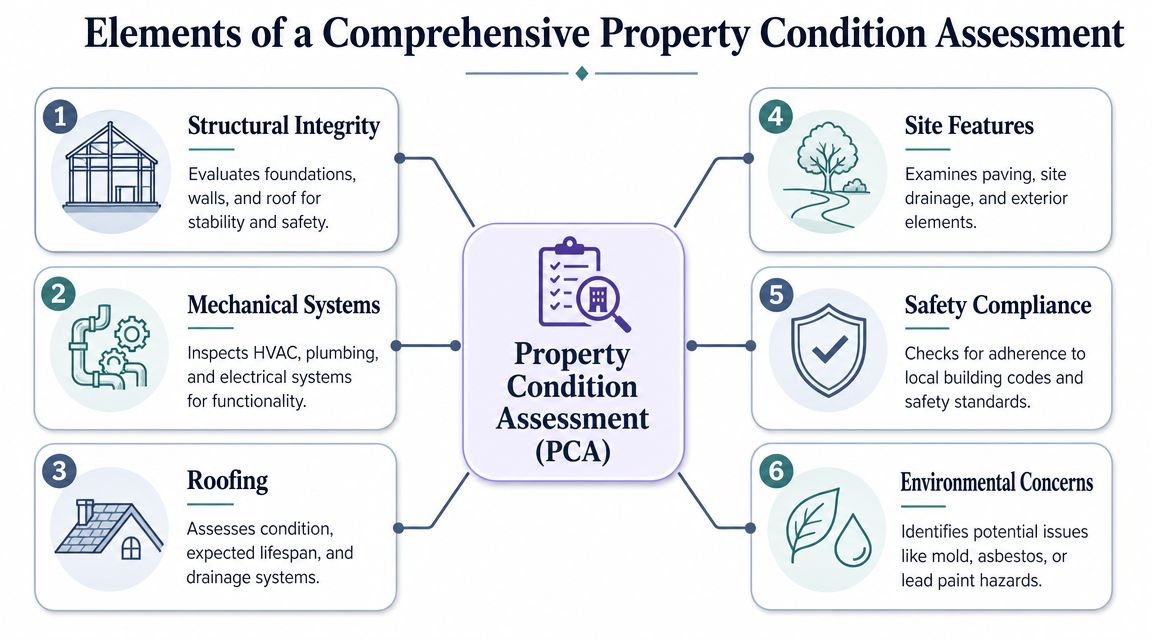
The core areas an assessor reviews
Think of the PCA as a building check-up from the ground up.
Structure and stability
Foundations, load-bearing walls, slabs, framing, and visible signs of movement matter first. Cracks, settlement, deflection, and moisture-related deterioration are not decorative issues. They affect risk, insurability, and future works.Envelope and weather protection
The roof, façades, windows, doors, waterproofing, flashings, and sealants form the barrier between the building and the elements. In France, especially with older masonry buildings, water ingress is often the cost driver buyers underestimate.Mechanical, electrical, and plumbing systems
Heating equipment, ventilation, hot water production, electrical panels, visible wiring, plumbing runs, drainage, and fixtures are central to habitability and budgeting. Old systems don't always fail immediately. They simply transfer the replacement bill to you after completion.Interior condition
Floors, walls, ceilings, common areas, and signs of staining or distortion often reveal hidden issues elsewhere. A stained ceiling is rarely “just cosmetic.”
What the report actually delivers
A real PCA doesn't stop at observation. It produces a report that identifies deficiencies, estimates remaining useful life, and projects capital expenditures over a planning horizon commonly set at 10 years, sometimes alongside near-term items over 12 months, as explained in USAnova's overview of what lenders expect from a PCA.
That matters because you're not buying a snapshot. You're buying the next years of ownership.
A seller can show you a tidy house. A PCA shows you the likely repair calendar behind that presentation.
What a PCA is not
It isn't invasive. The assessor won't open walls or dismantle systems. It also isn't a contractor quotation. It is a professional condition review and a capital planning tool.
For a buyer in France, that distinction is useful. You first need an independent diagnosis of the building's overall health. Then, if the report flags serious concerns, you can order targeted specialist reviews or contractor quotes before you commit fully.
PCA vs French Diagnostic Reports DDT
Most non-resident buyers make the same mistake at least once. They assume the French seller's diagnostics cover the same ground as a property condition assessment. They don't.
The Dossier de Diagnostic Technique, or DDT, is a mandatory seller file. It addresses specific legal diagnostics required in France. That's helpful, but limited. A PCA serves a different purpose entirely. It protects the buyer by evaluating the broader physical condition of the asset and translating it into likely costs.
The comparison that matters
Attribute | Property Condition Assessment (PCA) | Dossier de Diagnostic Technique (DDT) |
|---|---|---|
Primary purpose | Buyer due diligence and future cost planning | Seller's legal compliance package |
Who commissions it | Usually the buyer or lender | The seller |
Scope | Broad physical review of building condition and major systems | Set of mandatory French diagnostics on specific regulated topics |
Method | Walk-through, document review, interviews, expert analysis | Individual regulated diagnostic reports |
Focus | Defects, deferred maintenance, remaining life, capital expenditure | Legal disclosure on defined risk categories |
Use in negotiation | Strong tool for price revision or repair requests | Useful context, but not enough on its own |
Use in financing | Supports lender understanding of collateral condition | Doesn't replace buyer-side technical due diligence |
Typical perspective | Financial and technical | Compliance and disclosure |
Why the DDT isn't enough
French diagnostics can tell you important things about regulated subjects. They can flag issues such as asbestos, lead, or energy performance depending on the property and transaction context. But they won't give you a buyer-oriented view of how the building is aging as a whole.
They also won't usually answer the questions that matter most to a foreign purchaser:
How long will the roof or heating system realistically last?
Which items need immediate work after completion?
What looks acceptable today but could create a major cost soon?
Should you renegotiate the price before signing the compromis de vente?
That's the gap a PCA fills.
My advice to foreign buyers
Don't treat the DDT as protection. Treat it as baseline legal paperwork.
A serious buyer in France reads the DDT, then commissions an independent review that examines the building as an asset. That's particularly important if you're buying an older apartment in a copropriété, a house with piecemeal renovations, or anything rural where maintenance history is patchy.
The DDT tells you what the seller must disclose. The PCA helps you decide whether the property is worth the price and financeable on sensible terms.
Why Expats Need a PCA for a French Property
A non-resident buyer has less room for error. Distance makes every mistake more expensive.
French banks already look closely at foreign income, currency profile, borrower insurance, and the quality of the asset. If the property itself raises questions, your financing file becomes harder. A PCA helps because it turns uncertainty into a documented technical position.
It gives banks a clearer collateral story
From a risk-engineering perspective, the value of a PCA is that it converts observed degradation, such as corrosion, leaks, settlement, insulation failure, or code issues, into a cause-and-effect capital plan. That allows buyers and lenders to distinguish ordinary wear from latent costs, as explained in Rimkus's article on property condition assessments.
That distinction matters in France. A lender doesn't just finance your income profile. It finances a property that acts as collateral. If your file shows a tidy legal package but no clear view of the building's physical condition, the asset side remains weak.
It improves your negotiation position
A PCA gives you an advantage because it changes the conversation from opinion to evidence.
If the report shows roof fatigue, visible moisture pathways, obsolete electrics, or near-term heating replacement, you can ask for one of three things:
A price reduction
Specific repairs before closing
A financial concession that reflects future works
Without a technical report, you're negotiating emotionally. With one, you're negotiating on documented defects and foreseeable expenditure.
It helps when you're not physically present
Many expats sign documents remotely, coordinate viewings through agents, and use a representative for parts of the transaction. If that sounds like your situation, it's worth understanding the legal mechanics around understanding power of attorney for expats, because remote execution is common in French transactions.
A PCA fits naturally into that remote process. It creates an independent reference point when you can't personally inspect every detail or meet every contractor on site.
Buy the property only after you understand the first years of ownership, not just the purchase price.
The PCA Process Demystified
Most buyers delay the PCA because they assume it's cumbersome. It isn't. The process is straightforward if you run it in the right order.
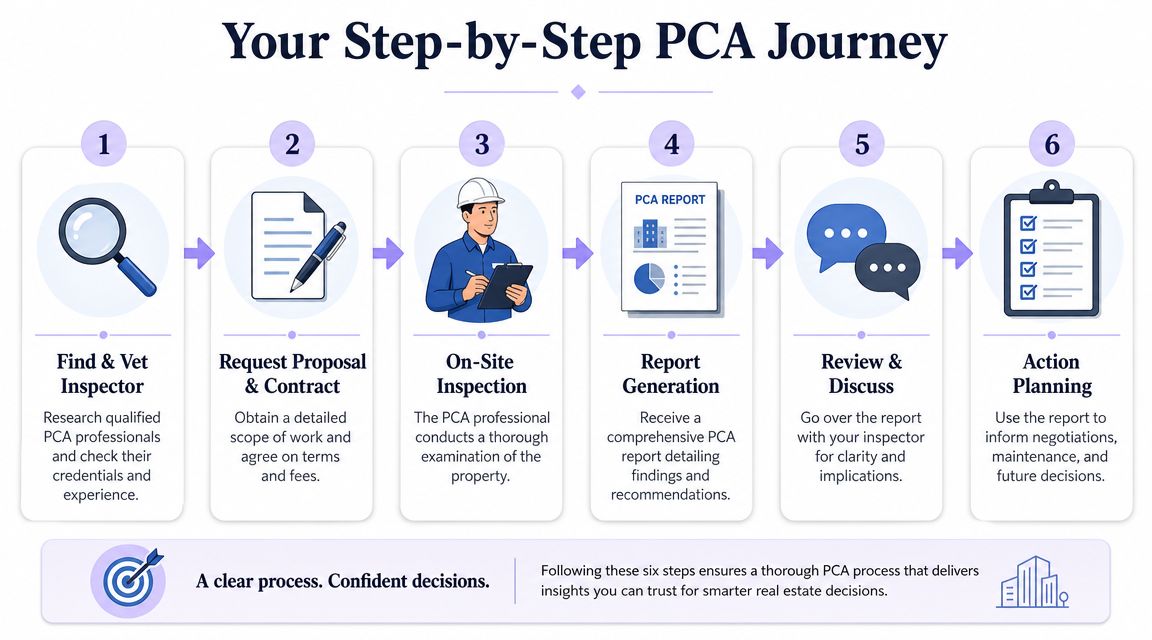
Step one starts with the right professional
Don't hire the cheapest general inspector you can find online. Hire someone who can analyse a building, not just list visible defects.
For a French purchase, I'd look for:
An architect or engineer with building pathology experience
Older French properties often require someone who understands masonry, moisture movement, roof assemblies, and renovation layering.Experience with buyer due diligence
A person used to pre-purchase work will write for decisions, not just for file completion.Clear reporting format
You want defects, likely implications, repair priorities, and future works grouped coherently.
If you want a practical buyer-side checklist before commissioning the visit, Residaro's property inspection advice is a useful companion resource.
The usual sequence
The workflow is simple when managed early.
Request a proposal with scope, exclusions, timing, and deliverable format.
Share documents already available, such as diagnostics, plans, invoices, maintenance records, and co-ownership papers if relevant.
Arrange access through the agent, seller, or property manager.
Attend remotely or in person if possible. Even a short call during the visit can be useful.
Receive the report and review the findings line by line.
Escalate targeted issues if needed, such as roof, structural, damp, or electrical follow-up.
What they often find in French homes
The list is familiar.
Electrical installations that function but no longer inspire confidence
Roof wear hidden by cosmetic interior refreshes
Moisture staining around chimneys, parapets, or old stone walls
Single-glazed windows or aging frames with poor thermal performance
Heating systems that are serviceable now but close to replacement
Drainage and waterproofing issues around terraces, courtyards, or basements
Ask the assessor one direct question after the report: “If you were advising your own family, what would concern you most before signing?”
Timing and cost reality
The exact timeline and fee depend on the property, the location, access, and the depth of reporting. I won't invent a range for you. What matters is this. A rushed, low-cost inspection that misses expensive defects is not cheap. It's expensive in disguise.
Build enough time into the deal so the report can arrive before your commitment hardens. That single discipline prevents a lot of bad purchases.
Using PCA Findings to Your Advantage
The report only has value if you use it aggressively and intelligently. Too many buyers read it, worry for a day, then proceed on the same terms. That's weak negotiating.
Turn findings into negotiation points
A PCA usually separates issues into immediate concerns, short-term works, and reserve items. That structure is useful because it gives you a clean framework for discussion with the seller and agent.
Use the findings in tiers:
Immediate defects
These justify urgent requests. Think active leaks, obvious electrical concerns, or visible structural movement. Ask for correction, a credit, or a price adjustment.Short-term capital items
These support renegotiation where the property remains attractive but needs foreseeable investment soon after purchase.Reserve planning items
These won't always move the price, but they should influence your budget and financing comfort level.
Don't send the full report and ask vaguely for “a gesture.” Extract the key pages, summarise the financial implications, and present a precise request.
Use the report inside the mortgage file
For a bank, a good technical report can help frame the asset as understood rather than uncertain. That's particularly useful where the property is old, atypical, rural, or partially renovated.
You don't need to dramatise defects. You need to show that you've identified them, priced them sensibly, and planned for them. Lenders prefer buyers who behave like investors, even when the purchase is for personal use.
If you're comparing works budgets after receiving the report, it helps to compare contractor quotes for repairs using a structured method rather than accepting the first estimate you receive.
Coordinate with the notaire properly
In France, verbal understandings are not enough. If the PCA leads to a revised price, a repair obligation, or a condition affecting your commitment, that point needs to be reflected correctly in the sale documentation, especially the compromis de vente.
Speak to the notaire early. Don't assume the agent will frame the clause properly for you.
For buyers approaching the transaction from an investment angle, this broader article with expert advice for expat property investors is worth reading because it helps place technical due diligence inside the wider acquisition logic.
The best moment to use a PCA is before everyone is emotionally committed to closing on the original terms.
Your PCA Action Plan and Checklist
You don't need a perfect process. You need a disciplined one.
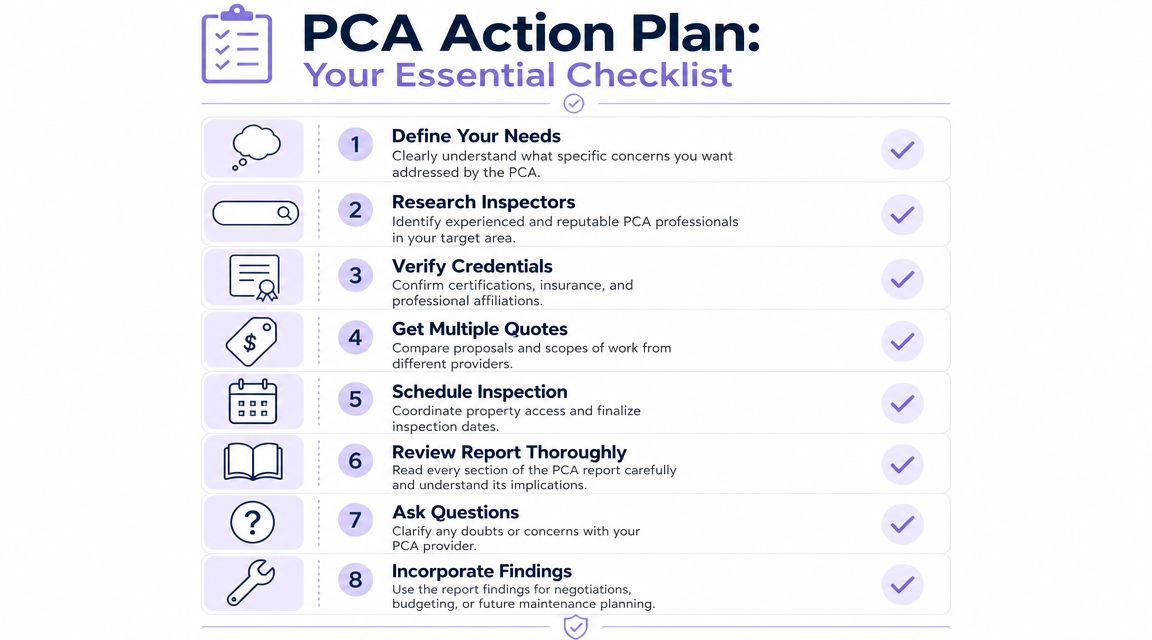
Your checklist before signing too far
Work through this in order.
Confirm the due diligence window
Make sure the transaction timeline gives you enough room to commission, receive, and act on the report before your obligations become difficult to reverse.Choose the right assessor
Ask who will perform the inspection, who signs the report, and whether they regularly handle buyer-side pre-acquisition reviews.Share all available documents early
Diagnostics, renovation invoices, maintenance records, co-ownership minutes, plans, and prior works matter. Missing context often hides the complete picture.Attend the inspection if you can
If not physically, then by video or call. You'll learn more from ten minutes of direct discussion than from twenty emails afterward.
Questions to ask before hiring
These questions filter weak providers quickly:
Are you familiar with ASTM E2018 and buyer-focused PCA reporting?
What experience do you have with properties of this age and construction type?
Will the report include remaining useful life and future capital items?
How do you distinguish urgent defects from routine maintenance?
What are your exclusions?
Can you flag where specialist follow-up is needed?
When will the final report be delivered?
What to do after the report arrives
Don't just skim the summary. Read the photographs, notes, and repair logic carefully.
Then act:
Prioritise the findings by immediate risk, cost impact, and financing relevance.
Prepare a negotiation position with specific requests.
Brief your broker and notaire so financing and documentation reflect the technical reality.
Decide clearly whether to proceed, renegotiate, or walk away.
Walking away from the wrong property is not failure. It's due diligence doing its job.
If you're buying from abroad and want a mortgage strategy that fits both your borrower profile and the property you're targeting, speak with Invexa. They specialise in French real estate financing for expatriates and non-residents, handle the process remotely, and can help you present a cleaner, more credible file to French banks before you reach the notaire stage.